Written by
Melanie March 2 min read
How to Know When It’s Time to Replace the Wheel Bearings on Your Trailer
Share:


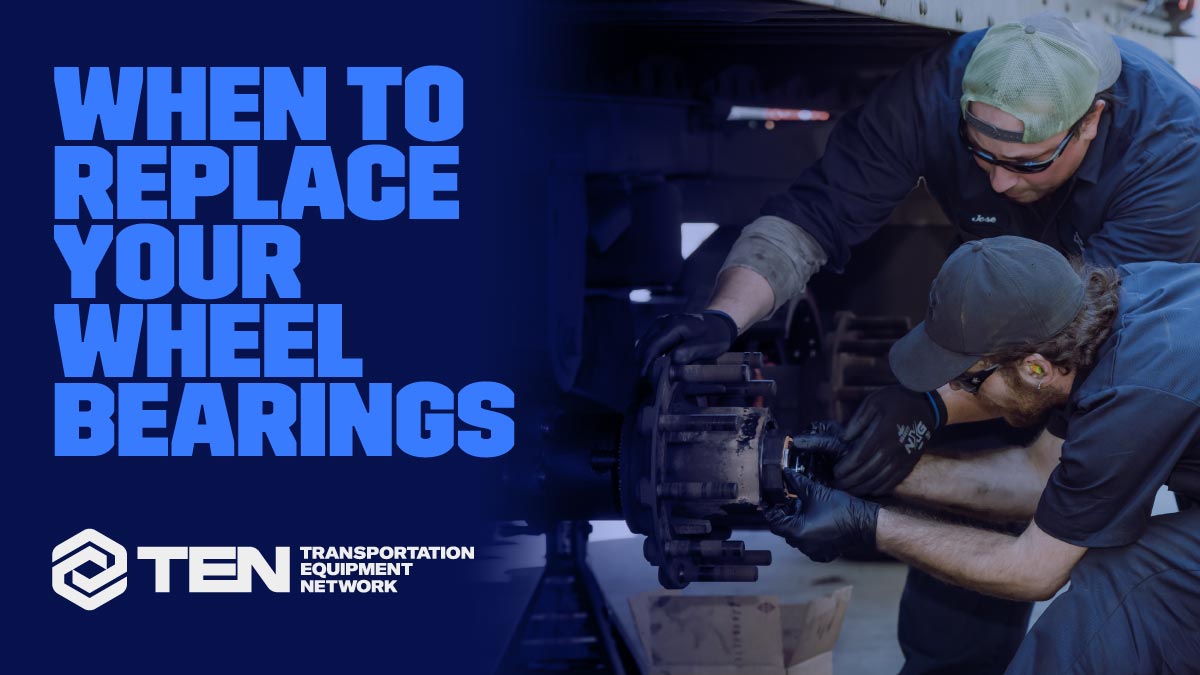
Wheel bearings play a critical role in keeping your trailers running smoothly and safely. When they begin to fail, they not only reduce performance, they can also lead to costly breakdowns, unexpected downtime, and long-term damage to your equipment. Whether you’re managing a fleet or operating a single unit, understanding when to replace wheel bearings is essential for protecting your assets and keeping your trailers road ready.
Below are clear indicators that it’s time to inspect, and likely replace, your trailer’s wheel bearings.
Signs Your Wheel Bearings Need Immediate Replacement
If you encounter any of the following issues during a wheel-end inspection, the wheel bearings should be replaced right away:
- Metal flakes in the lubricant
- Dry, caked lubricant in the hub cap
- Heat discoloration
- Visible wear, such as grooves on the bearing rollers
- A bearing cup spinning in the hub bore
- A bearing cone spinning on the spindle
- Dents, spalling (flaking), or raised metal on races or rollers
These conditions indicate that the bearing has already been compromised. Continuing to run a trailer in this condition can lead to significant wheel-end failures.
Signs It May Be Time to Consider Replacement
Some issues aren’t as severe but still suggest that bearing replacement should be considered as part of a proactive maintenance strategy:
- Noise when rotating the bearing cone
- Rusty bearings or water inside the wheel end
- Axle nut face wear
- Spindle wear (like a bearing cone spinning on the spindle)
- Hub bore wear (like a bearing cup spinning inside the hub)
- A bearing that has been dropped
Addressing these issues early can help avoid expensive wheel-end repairs and extend the life of your trailer fleet.
Why Timely Wheel Bearing Replacement Matters
In the trailer leasing and transportation equipment industry, uptime is everything. Faulty bearings can cause:
- Increased friction and heat
- Premature wear on other wheel-end components
- Unexpected roadside failures
- Higher maintenance costs over time
Need Wheel-End Support? TEN Care Has You Covered.
From preventative maintenance to emergency repairs, TEN Care provides the expertise and service you need to keep your fleet performing at its best. Whether you’re managing refrigerated units, dry vans, or specialized trailers, our team ensures your equipment stays reliable.
For any trailer maintenance needs, TEN Care is here to support you, every mile of the way.
Learn more here.
Featured
TEN Acquires Boston Trailer, Strengthening Position as Leading Trailer Lessor Across North America
Dublin, OH —November 8, 2024— TEN (Transportation Equipment Network) announces its acquisition of Boston Trailer,...
Read More
TRENDING ARTICLES
How Fleet Tech is Changing Refrigerated Logistics
How to Reduce Product Loss in Refrigerated Transportation
Powered by TEN: October 2025 Edition
CATEGORIES
TEN